
Follow your own compass.
A lesson from my father.
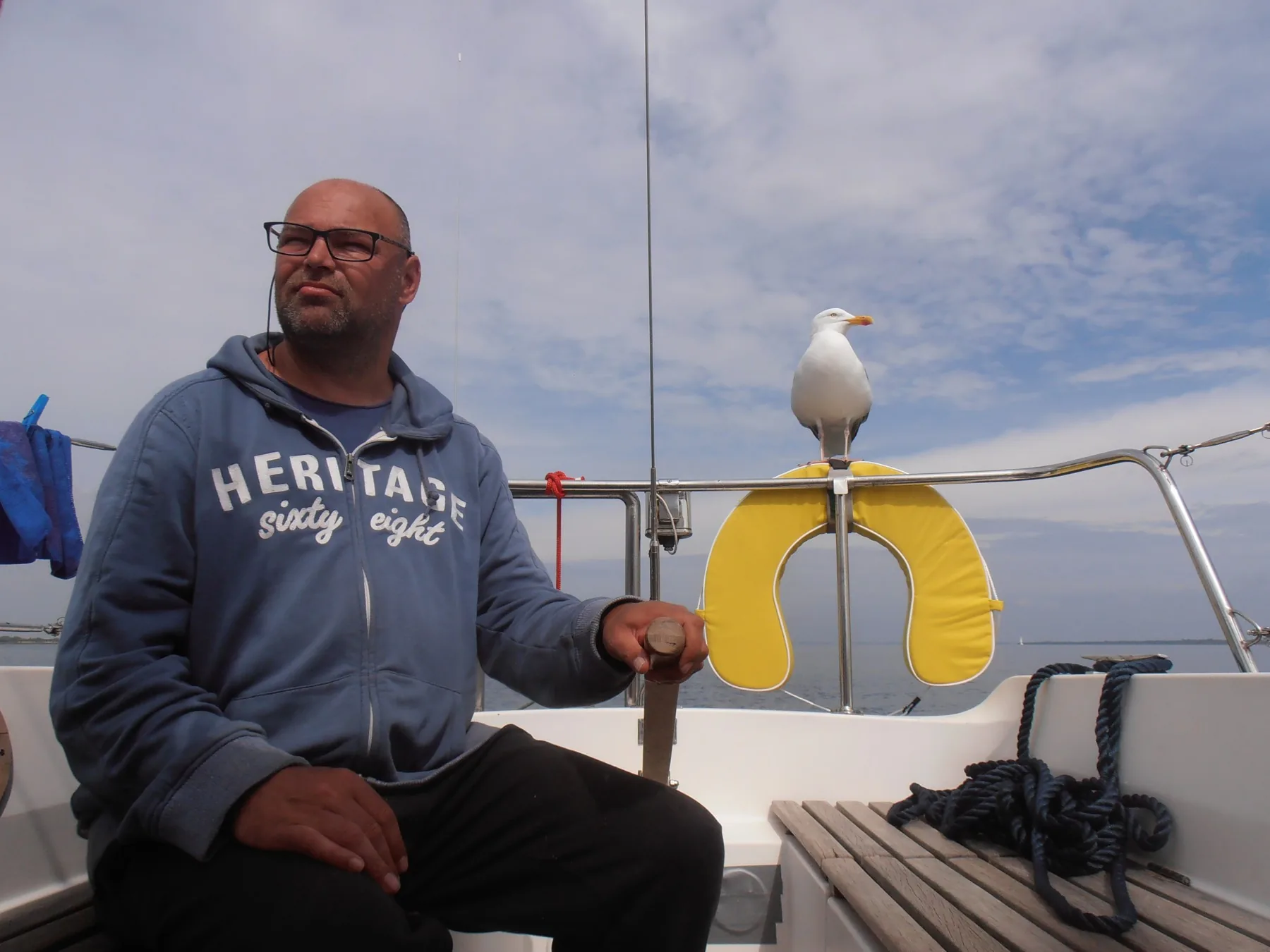
The skipper
Ivo van der Wal — Skipper, peer support worker and researcher
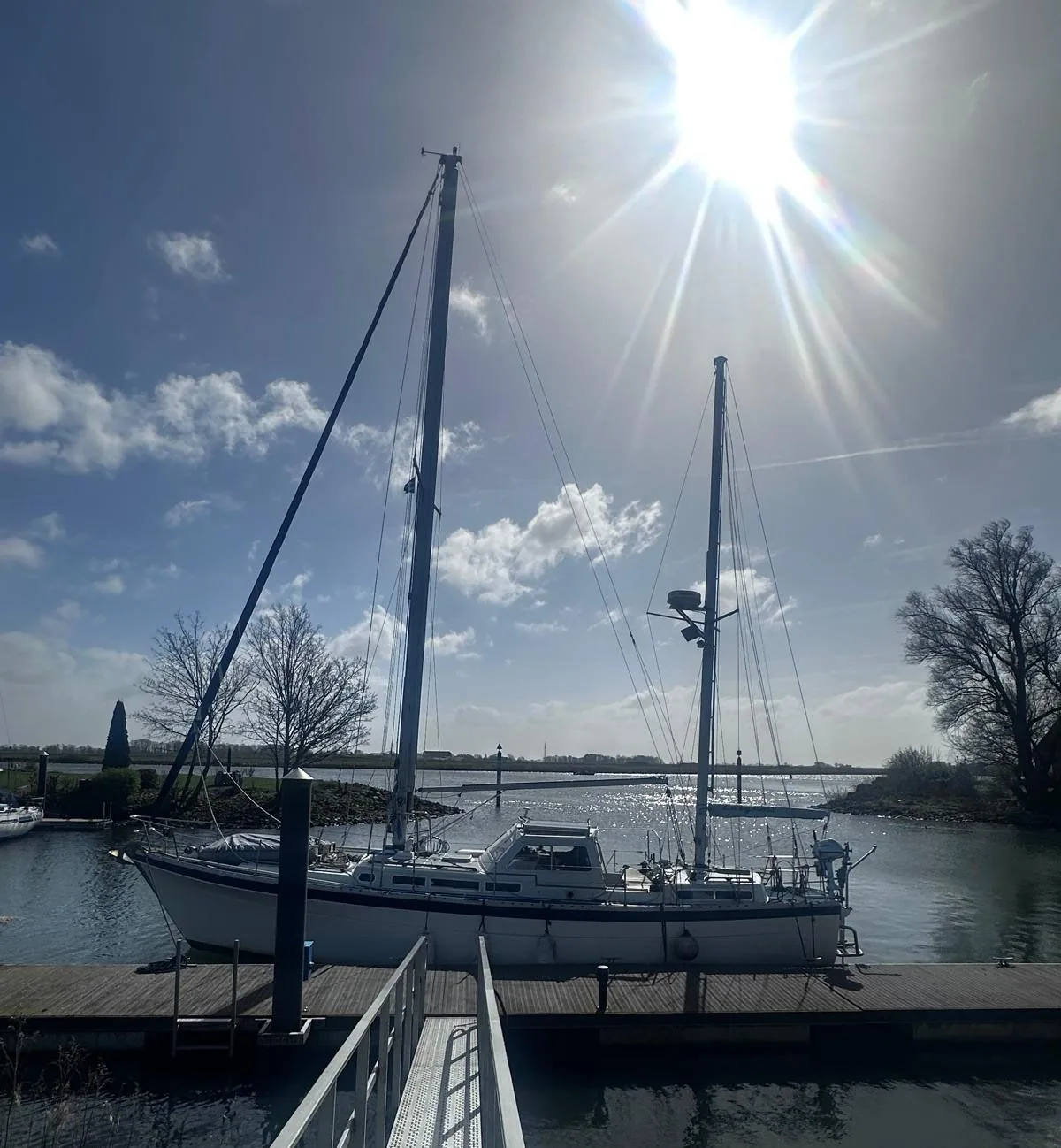
I am Ivo van der Wal. I spend extended periods aboard a classic sailing yacht, a two-masted Moody 42. The boat is my starting point for exploring more of the world.
Alongside sailing, I work in mental health care as a social care practitioner and peer support worker. I also research consciousness, human experience and the way we understand the world.
My life has taken several courses. Not everything went to plan. Along the way, though, I have learned a great deal about freedom, responsibility, trust and starting again.
With Sail4Recovery, I bring those different worlds together.
My story on the water began much earlier, in a shed at my grandparents’ home.
1. It began in a shed.
From the first keel to the wider world.
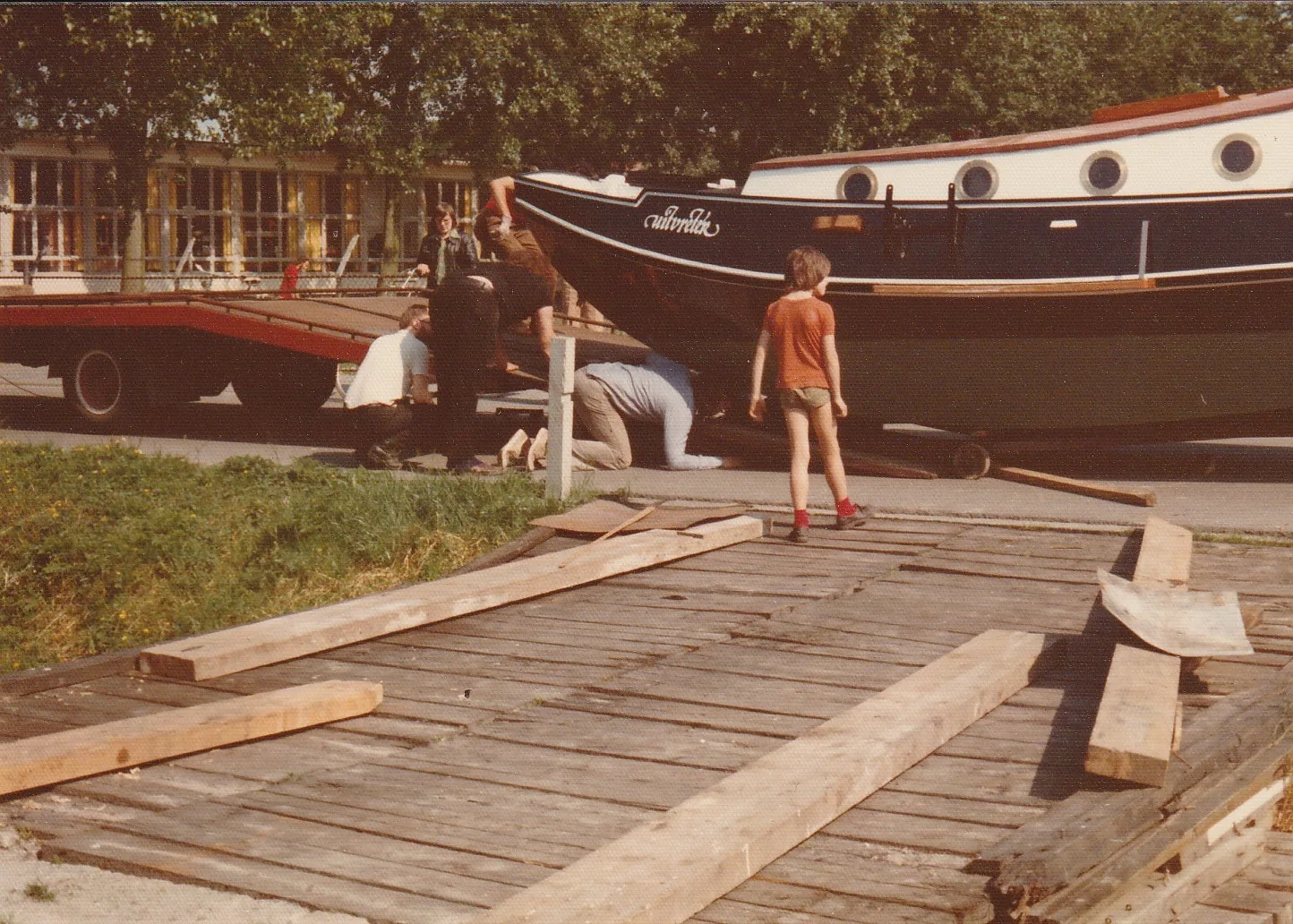
My father built his first boat himself. He gained a welding qualification, bought steel plates and building plans, and started work on a 7.30-metre Huitema Schouw. Not in a boatyard, but in the shed at my grandparents’ home.
I was still at primary school. I had lunch with my grandparents, and every day I would pop into the shed to see what my father had done the evening before. Almost every evening after work, he carried on building his boat.
I watched the whole boat take shape, from the keel to a complete sailing yacht. Frame by frame, part by part. What began as a collection of steel plates and plans slowly became a boat we could take on adventures.
And we did.
We sailed around the Netherlands, explored new waters and dried out on the tidal flats of the Wadden Sea. The rhythm of tides, wind and weather became part of my life early on.
So my interest in boats and sailing did not begin with a sailing course or a holiday. It began in a shed, where every afternoon I could watch my father turn his dream into reality.
2. A life on the water.
From small dinghies to open water.
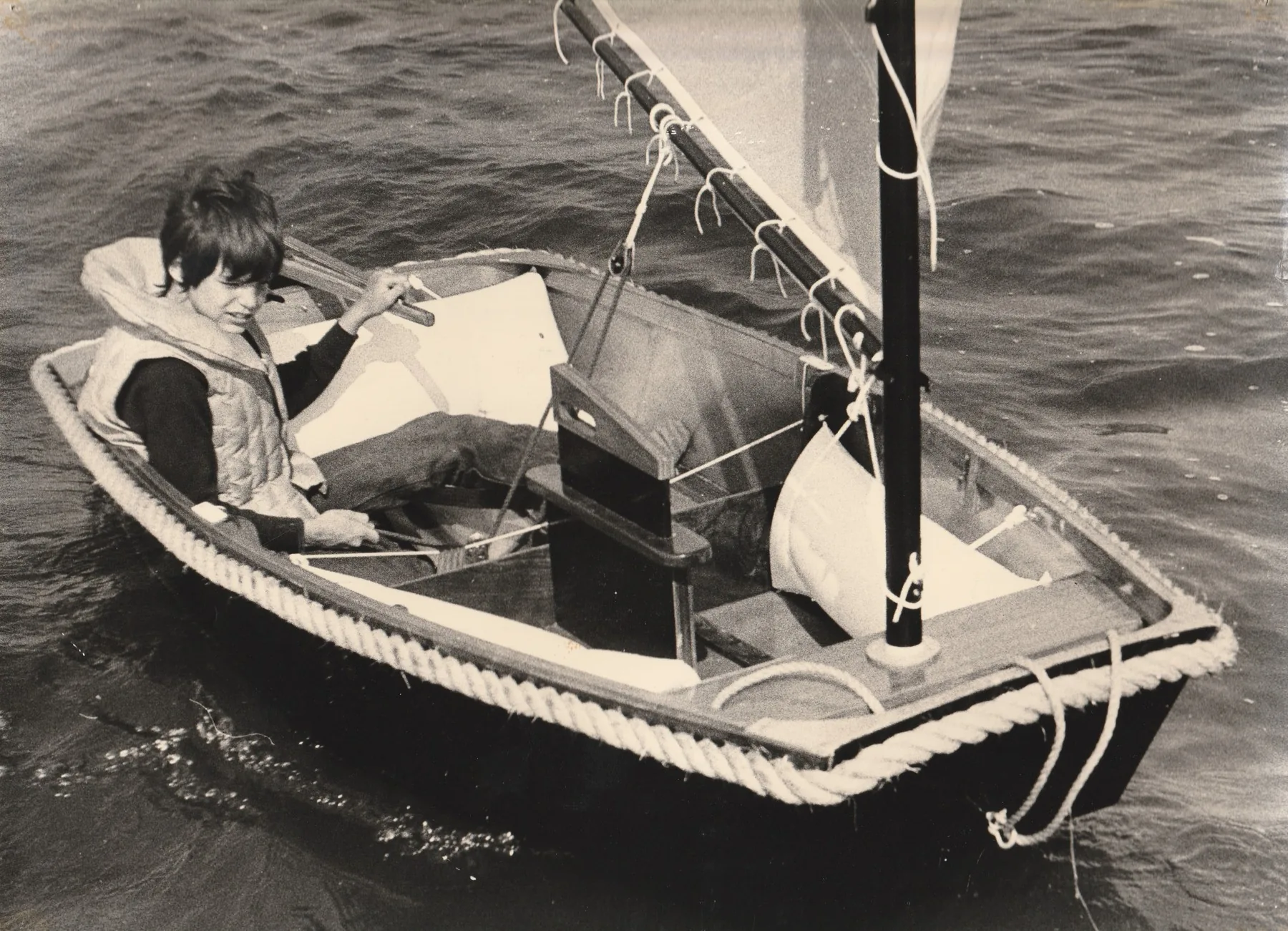
As a child, I learned to sail in an Optimist. As I grew, the boats grew with me: from an Optimist to a Flying Junior, and then a Waarschip 600. Each boat had its own character and brought new possibilities.
To me, sailing means freedom, discovery and being on the move. It also means learning to deal with conditions you cannot control.
The wind shifts. The weather changes. Sometimes a destination turns out to be beyond reach. You learn to observe, think ahead and adjust your course.
In the years that followed, I made increasingly long voyages. I sailed different boats, including, later, my own Contest 28. My experience of navigation, maintenance, technical work and life aboard grew with them.
I now spend extended periods aboard a Moody 42 CC Ketch, a classic sailing yacht with two masts. The boat is the starting point for my new journeys.
Water has been present throughout my life. Sometimes as a friend, sometimes as a challenge, but always as a place where I feel at home.
3. Our trust was justified.
The North Sea Triangle — June 1989.
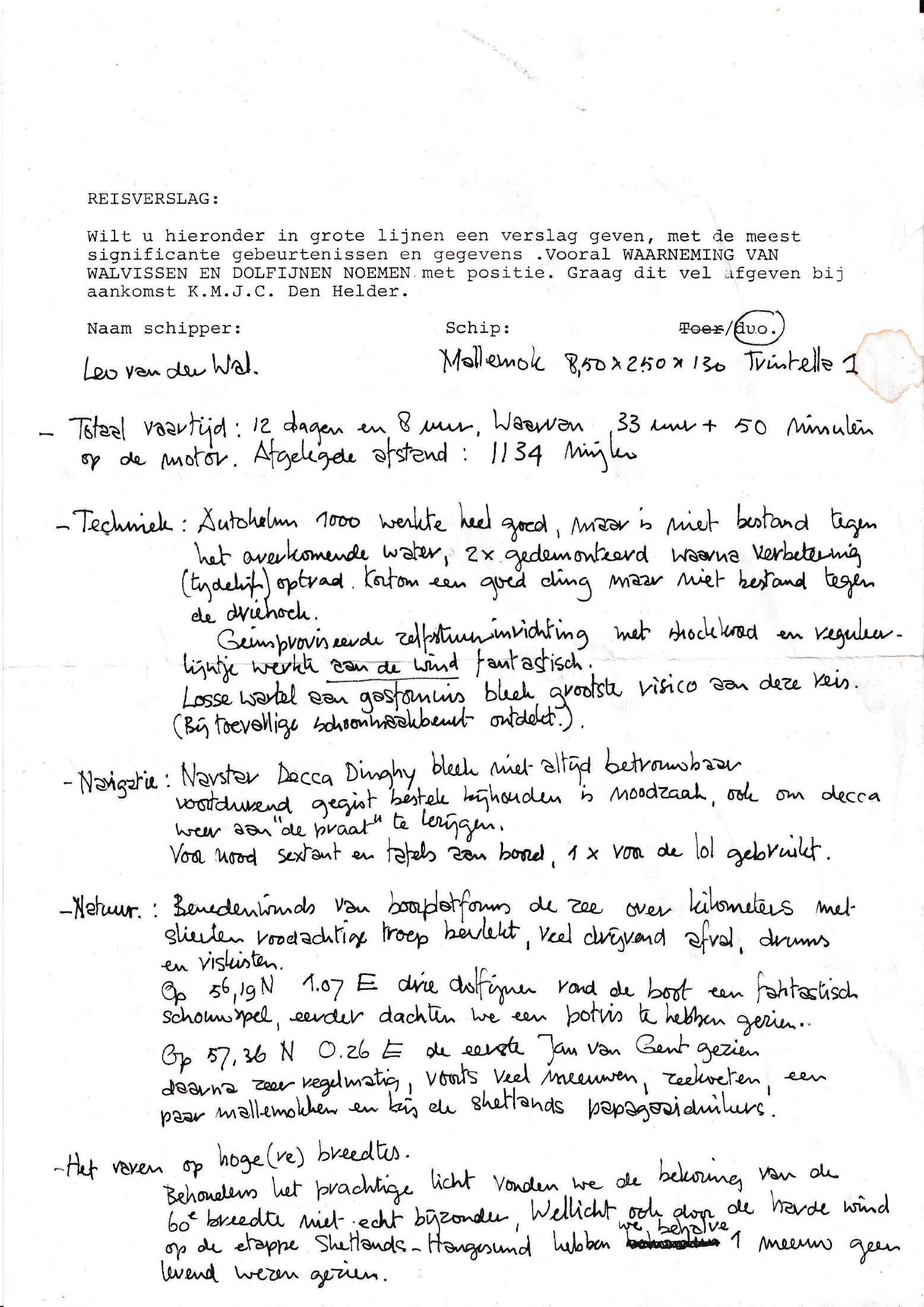
On 17 June 1989, my father and I left Den Helder on my first major sea voyage. I was 21 and had left a rehabilitation centre only a few months earlier.
We sailed the North Sea Triangle in an 8.45-metre Trintella: from Den Helder to Lerwick in Shetland, then to Haugesund in Norway, and finally back to the Netherlands.
It became a journey that meant a great deal to both of us.
During the crossing from Shetland to Norway, the wind kept increasing. The sea built up until we were facing force nine winds.
The Decca navigation system failed us. Not knowing exactly where we were, we had no choice but to sail along the Norwegian coast, hoping a lighthouse would finally come on so we could fix our position.
It was cold. We were tired. The waves were enormous, long and awe-inspiring.
When a lighthouse finally became visible, we could establish our position and set a course for Haugesund.
But the most nerve-racking part was still to come.
In the half-light, we entered the channel between the rocks. Later, we stood on the high rocks and looked back at the route we had taken.
Only then did we see how narrow the channel really was. Sharp rocks on either side, with waves breaking over them.
We were terrified all over again. We had not been able to see that in the dark.
For me, that voyage meant much more than a first major crossing.
After a difficult period, the trip helped me regain confidence in myself. Not because someone told me what I could or should do, but because I undertook something with my father that truly called for trust, responsibility and cooperation.
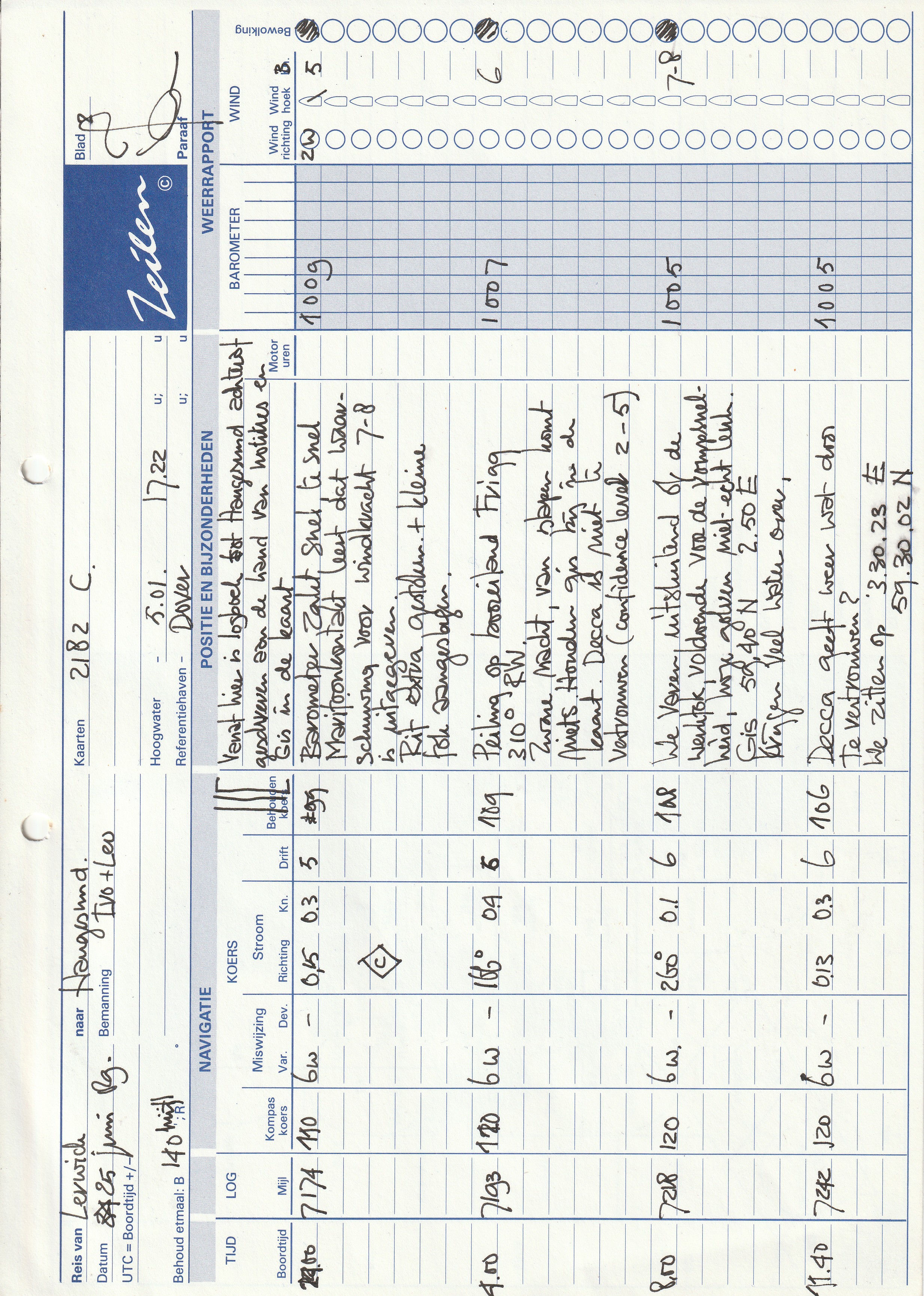
Recently, my father brought the old 1989 logbook for my birthday. The paper had yellowed, but the handwritten positions, courses and accounts were still surprisingly clear.
One sentence moved me all over again:
“Our trust in ourselves and the boat was justified.”
Perhaps part of the origin of Sail4Recovery lies here.
My father gave me room to discover for myself what I could handle.
Read the full story of the 1989 North Sea Triangle →Coming later.
4. Not everything goes to plan.
Experience stays with you. Even when you start again.
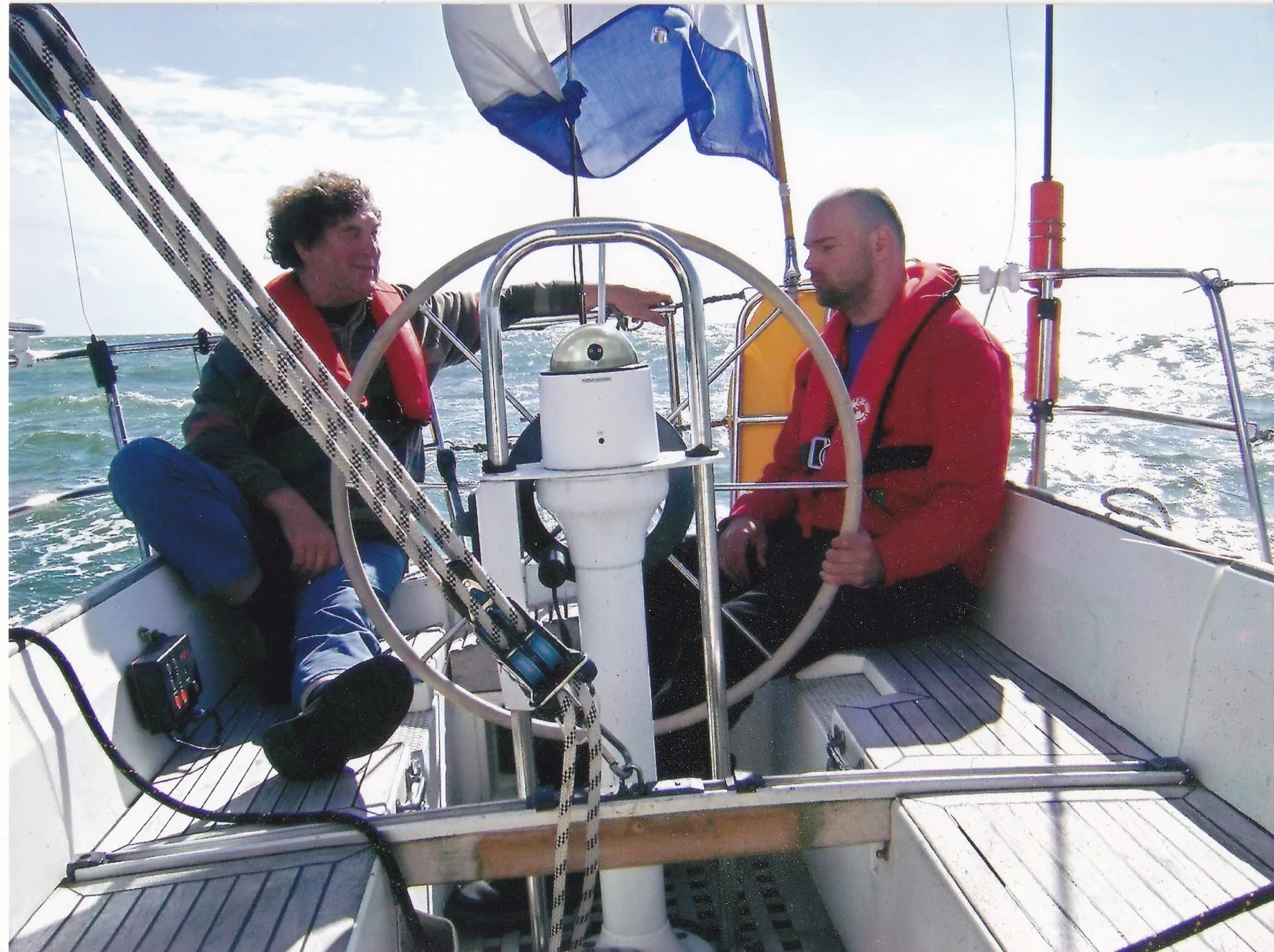
My life has not always followed a straight course.
I know what it is like when things you took for granted disappear, when you get stuck and when you have to rediscover how you want to live.
Addiction, mental distress and periods of recovery have left their mark. Not only in difficult memories, but also in the way I see people and life.
I have learned that recovery does not always mean returning to how things used to be. Sometimes something fundamental changes and a different way of living emerges.
I also do not believe recovery has to mean constant progress. Sometimes you stand still. Sometimes you go backwards. Sometimes very little seems to happen for a long time.
As far as I am concerned, there is room for all of that.
What helps one person may turn out very differently for another. No one on the outside can determine exactly which path someone needs to take.
That conviction did not come only from my own experiences. It has also grown over the years through the many people I have met.
5. Learning from lived experience.
The person behind the story.
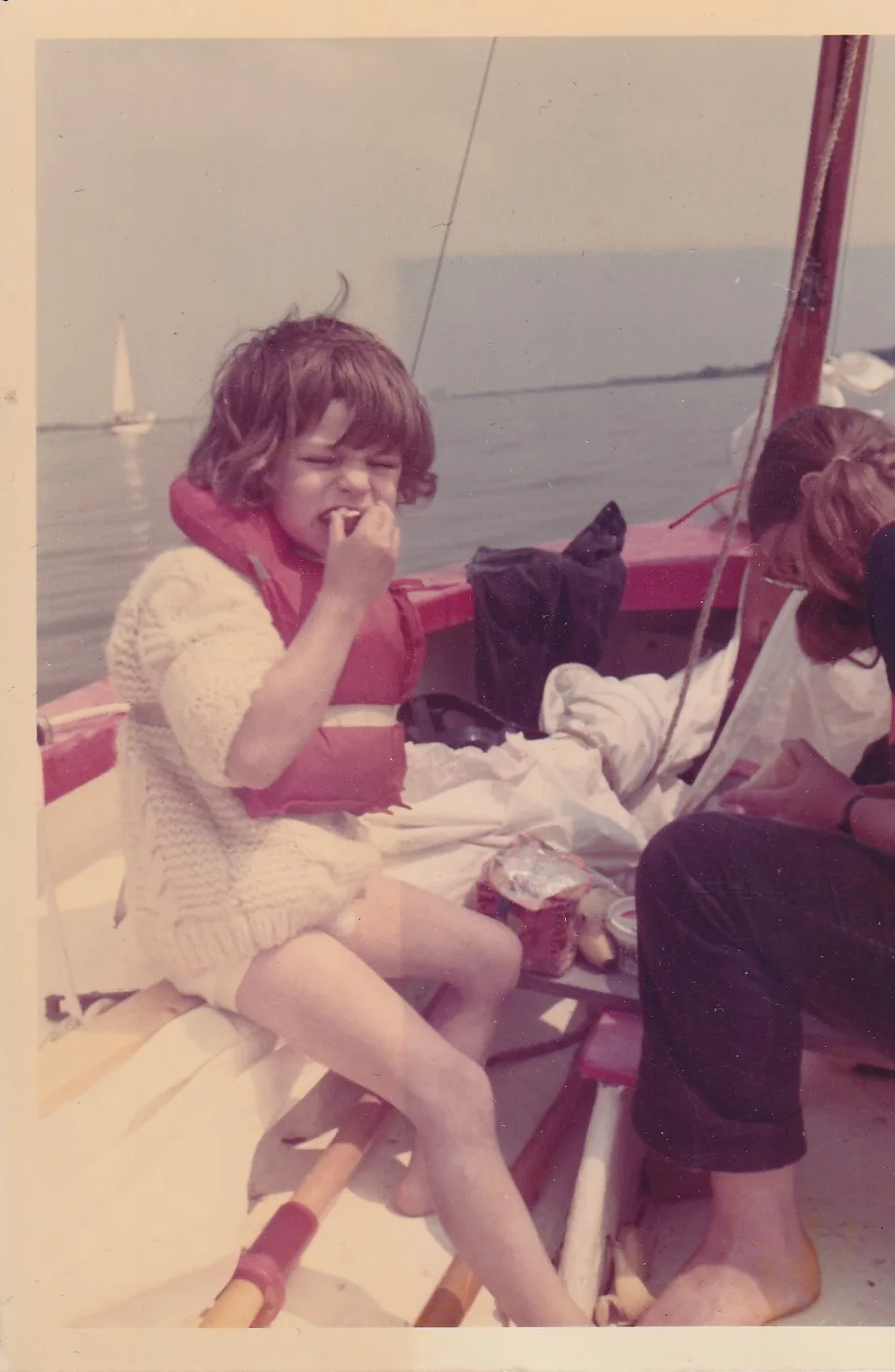
My working life began in technical theatre. For fifteen years, I worked with lighting, sound and everything needed to make a performance possible.
Then I chose a different direction and began working in mental health care.
As a mental health social care practitioner and peer support worker, I meet people dealing with vulnerability, mental distress, loss, recovery and the sometimes complicated systems around them.
In that work, my personal experience and professional knowledge come together. But I am also aware that my story is never someone else’s story.
What helped me may not work for another person.
I believe it is important to meet people without immediately defining them by a diagnosis, a problem or their social position.
Not everything needs to be resolved. Not every conversation needs to lead somewhere. Sometimes a valuable encounter begins with listening, curiosity and giving the other person space.
I bring that way of seeing people aboard too.
6. Curiosity as a compass.
Keep exploring. Keep discovering.
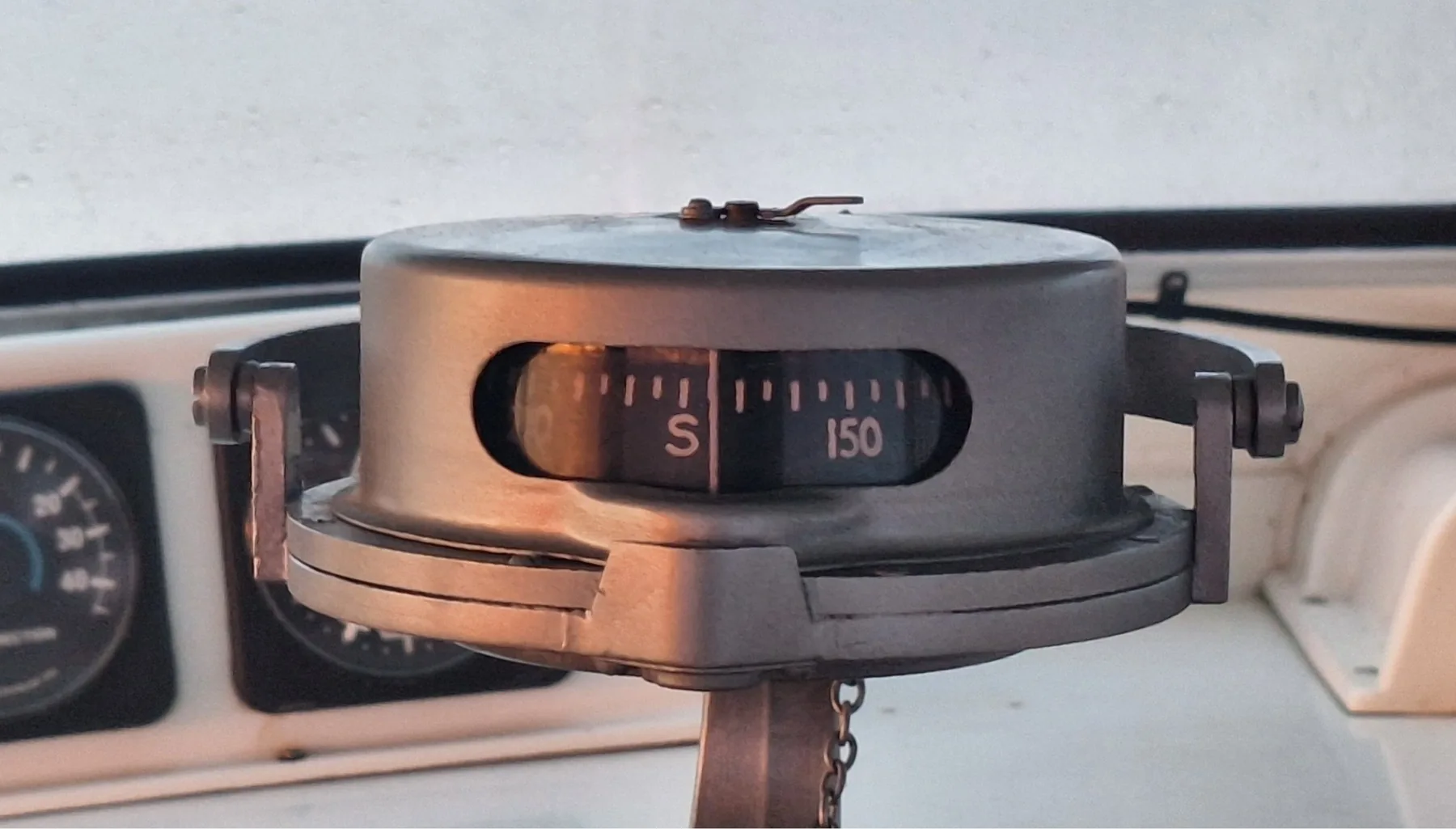
Alongside sailing and my work in mental health care, I explore consciousness, human experience, cooperation and the way we understand reality.
I am curious about how people give meaning to events, how relationships form and how our position shapes what we can and cannot see.
From that interest, I am developing the I·V·O Lens, an analytical framework for exploring possibilities, relationships and selection processes.
I enjoy examining established assumptions, including my own. Not to prove myself right, but to better understand what is happening and what other explanations are possible.
That curiosity does not stop when I step aboard.
A sailing voyage constantly brings situations that call for observation, judgement and a response. Sometimes interesting conversations emerge. Sometimes they do not.
Both are fine.
Nobody aboard has to engage with theory, personal development or research. The experience itself is enough.
7. Travelling together.
Not a guru. A skipper.
With Sail4Recovery, I bring together different parts of my life: sailing, my own experiences of recovery, my professional background and my curiosity about people and their stories.
I spend extended periods aboard my boat and invite others to share a little of that life.
We sail, cook, eat, talk, laugh or sit in silence. Sometimes we cover a considerable distance. Sometimes we stay somewhere because the weather calls for it or because the place feels right at that moment.
There is no fixed daily programme, and nobody needs to come aboard with a predetermined goal.
I do not offer therapy or promise that a sailing voyage will change anyone’s life.
What I can offer is a well-prepared boat, my experience as a sailor, a small group and room to spend a few days outside your usual surroundings.
As skipper, I remain responsible for the boat, navigation and safety. Sometimes that calls for clear decisions.
Beyond that responsibility, though, I value equality. Aboard, we are people first, each with our own background and experiences.
I know from experience how valuable it can be when someone trusts you and leaves room for you to discover something for yourself.
What someone else does with that space is not for me to decide. My father always said: “Follow your own compass.” Those words have stayed with me all my life. With Sail4Recovery, I want to give others room to discover their own course. Not to decide where they should go, but to sail alongside them for a while.
Well organised. Free to experience.
Shall we meet?
Would you like to know more about Sail4Recovery, get acquainted or discuss whether a voyage might suit you?
Please feel free to get in touch.